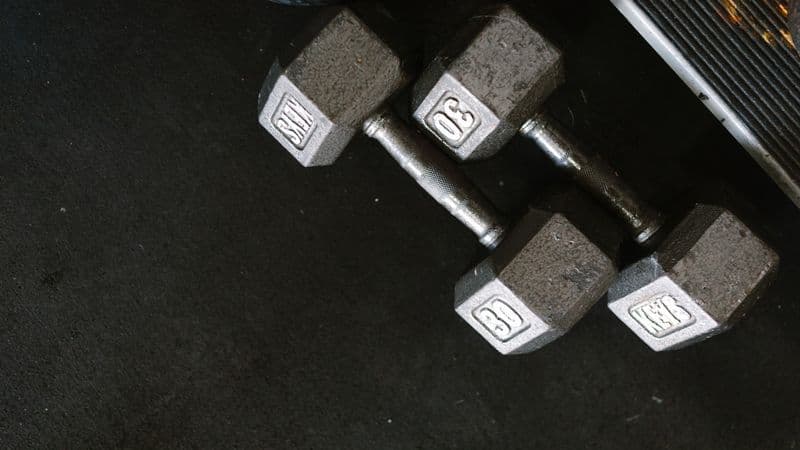
Price out a 5–50 lb rack of fixed dumbbells and the sticker shock asks the question for you: are adjustable dumbbells worth it compared to a few hundred pounds of iron? For most people training at home, the answer is an emphatic yes. One adjustable pair does the work of fifteen fixed pairs, in about two square feet, for less than half the money. But the answer has real exceptions — and the price swings 25–35% depending on when you buy. Here's the honest math, the trade-offs, and the timing.
Are adjustable dumbbells worth it? The cost-per-pound math
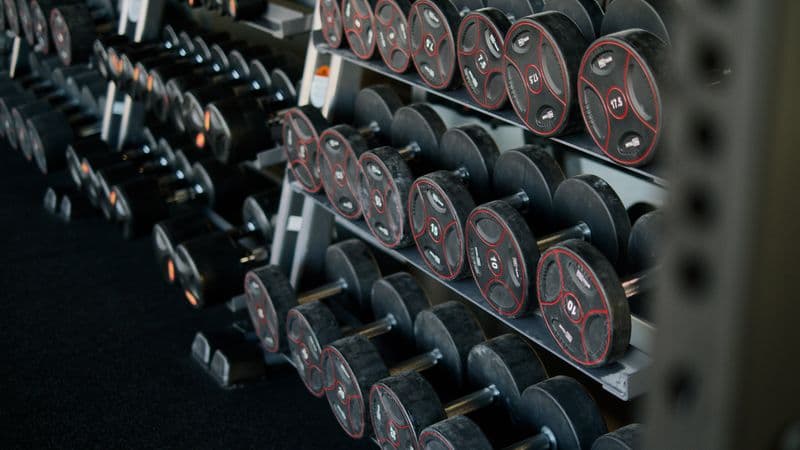
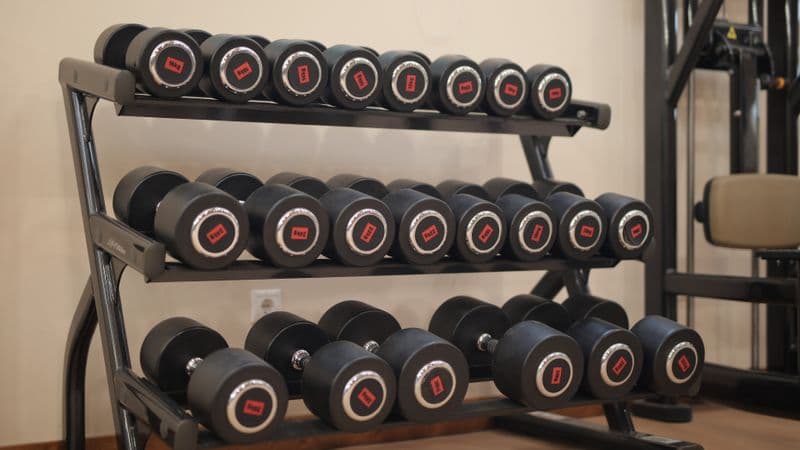
Fixed rubber hex dumbbells typically sell for $1.50–2.50 per pound at street prices. A sensible home range — 5 to 50 lb pairs in 5 lb jumps — is ten pairs totaling around 550 pounds of iron, which lands somewhere between $800 and $1,200 before you add the $150+ rack they'll need to live on. An adjustable pair covering the same 5 to 52.5 lb per hand runs $300–430 at regular price, and meaningfully less in a sale window. Even against aggressively discounted fixed sets, the adjustable pair is roughly half the outlay for the same working range.
The space math is just as lopsided. Ten fixed pairs claim an entire wall; an adjustable pair and its trays occupy a doormat-sized footprint beside a bench, which is the difference between a home gym that fits in a spare-room corner and one that is the spare room. If you train with dumbbells twice a week, the cost per workout drops under a dollar within two years — cheaper than almost any gym membership it replaces.
Two picks that span the budget
You don't need a roundup of ten models to settle the worth-it question. These two — one premium, one bare-bones — bracket the realistic price range, and each makes the case in a different way.
Best overall: Bowflex SelectTech 552 Adjustable Dumbbells
The 552 is the pair that makes the strongest worth-it case: fifteen weight pairs — 5 to 52.5 lb per hand, in 2.5 lb steps up to 25 lb — in a single footprint, selected by turning a dial at each end. Owner consensus after years on the market is remarkably consistent: the dial mechanism is fast and smooth, the small increments are a genuine advantage for pressing progress, and the long handle plus plastic plate housings are the trade-offs you accept. They're bulkier than a fixed 15 lb dumbbell at light settings, and they are emphatically not for dropping. List price sits in the low $400s, but this is one of the most heavily discounted products in home fitness — sale windows routinely pull it toward $300.
Budget pick: Yes4All Adjustable Dumbbells (Cast Iron Set)
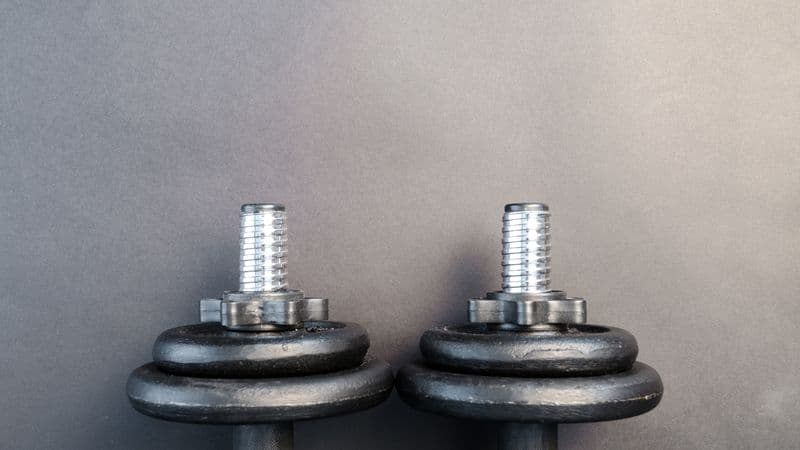
The Yes4All set is the cheapest way to test the adjustable life: painted cast iron plates, knurled handles, and spin-lock star collars, sold in total weights from around 40 to 200 lb. There's nothing to break — no dials, no trays, no plastic — which is why owners describe these as the pair that shrugs off abuse a SelectTech never could. The cost is your time: changing weight means spinning collars off, swapping plates, and spinning them back on, a 30–60 second ritual between exercises that gets old in circuit-style sessions. Collars can also loosen mid-set if you don't snug them down. As a sub-$150 proof of concept for dumbbell training, though, nothing else comes close.
Buy the range you'll grow into
Where adjustable dumbbells fall short — and who should skip them
The weaknesses are real, and they cluster around one theme: adjustables are precision tools, not blunt instruments. Dial and pin mechanisms depend on plates staying aligned in their trays, so a drop from bench height — the kind a fixed rubber hex dumbbell absorbs without complaint — can crack a housing or jam a selector. Adjustment speed is the second tax: dials are quick, but no adjustable changes load as fast as grabbing the next pair off a rack, which matters for drop sets and fast circuits. And the handles run longer than fixed dumbbells, which changes the feel of moves like hammer curls and renders light-weight settings oddly bulky.
That points to three groups who should skip them. If you drop weights at the end of heavy sets, buy fixed hex and never look back. If you train CrossFit-style metcons — high-rep, clock-pressured, weights meeting the floor — the mechanisms won't survive the style. And if you already press 70 lb+ per hand, the mainstream 50–52.5 lb pairs can't serve your top lifts, and heavy-capacity adjustables get expensive enough that fixed pairs plus a rack start to compete again.
Drops void the warranty
When to buy adjustable dumbbells cheapest
Adjustable dumbbells follow the fitness industry's promotional calendar, and the historical pattern is consistent: the deepest cuts — typically 25–35% on big names like Bowflex — land between Black Friday and Cyber Monday, with January's resolution season and Prime Day in July close behind. Between those windows, prices mostly sit at list with only shallow coupons. None of this is guaranteed in any given year, but the pattern has held long enough that paying full price in, say, September is usually a $80–150 mistake on a mid-range pair.
| Window | Typical move | Verdict |
|---|---|---|
| Black Friday / Cyber Monday | 25–35% off, deepest of the year | Buy |
| New Year (January) | 15–25% off resolution pricing | Buy |
| Prime Day (July) | 20–30% off, strongest on Amazon listings | Buy |
| October Prime event | 15–20% off, a smaller echo of July | Maybe |
| Regular weeks | List price, occasional shallow coupons | Wait |
- Typical move
- 25–35% off, deepest of the year
- Verdict
- Buy
- Typical move
- 15–25% off resolution pricing
- Verdict
- Buy
- Typical move
- 20–30% off, strongest on Amazon listings
- Verdict
- Buy
- Typical move
- 15–20% off, a smaller echo of July
- Verdict
- Maybe
- Typical move
- List price, occasional shallow coupons
- Verdict
- Wait
Ranges reflect typical historical discount patterns on mainstream adjustable dumbbells. Individual deals vary by year and model.
The verdict
For most home lifters, adjustable dumbbells are worth it without much drama: a $350 pair replaces $800+ of fixed weights plus a rack, fits beside a bench instead of along a wall, and pays for itself inside a year of twice-weekly training. The Bowflex SelectTech 552 is the pick if you want the full experience; the Yes4All cast iron set is the pick if you want to spend under $150 finding out whether you'll actually train. The exceptions — droppers, metcon athletes, and 70 lb+ pressers — should buy fixed hex and skip the category.
Still weighing the formats? Our full adjustable dumbbells vs fixed weights comparison goes deeper on durability and feel, and our best adjustable dumbbells under $300 guide covers the mid-budget models worth watching in a sale window. And if the real question is whether home cardio gear earns its space too, start with is a walking pad worth it.