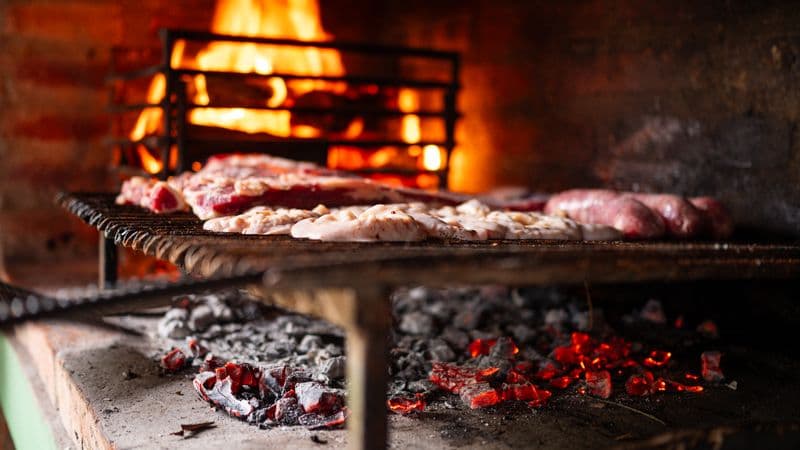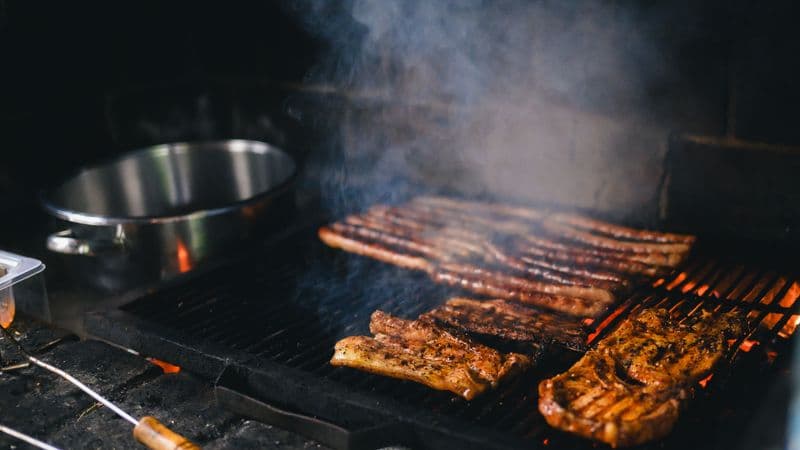


If you're typing is a pellet grill worth it into a search bar, you've probably watched a neighbor pull a mahogany-colored brisket off one, then flinched at the $500–1,000 price tags. Fair on both counts. A pellet grill is a genuinely different tool from the gas grill it usually replaces — better at some jobs, worse at others, and never free to run. Here's the honest breakdown: what you gain, what you give up, what it costs per cook, and when the price of entry drops far enough to make the decision easy.
Is a pellet grill worth it? The 30-second answer
Yes — if what you want is wood-smoke flavor without tending a fire. A pellet grill is best understood as an outdoor convection oven that burns hardwood: you fill the hopper, set a temperature, and an auger and fan hold it steady for hours while you do something else. For ribs, pulled pork, chicken, turkey, and anything low-and-slow, that combination is the reason owners who use them keep using them.
No — if your idea of grilling is a hard-seared ribeye, or if the grill comes out four times a summer. A pellet fire is indirect and capped around 450–500°F on most models, so it can't match the radiant blast of charcoal or a screaming gas burner, and the convenience premium never pays for itself at a handful of cooks a year. Everyone else is deciding between flavor ceilings and effort floors, which is what the rest of this guide is about.
What you gain, what you give up
The gain is consistency. A modern pellet controller holds its set point within roughly 10–15°F in reasonable weather, which turns the hardest part of barbecue — fire management — into a thermostat. Overnight pork butts stop being a camping trip. App-connected models add probe alerts and remote temperature changes, so a brisket stall interrupts your errands, not your day. And because the fuel is actual hardwood, the flavor lands meaningfully closer to a stick burner than anything a gas grill with a smoker tube can fake, even if purists correctly note it's a lighter smoke profile than charcoal and chunks produce.
The give-ups cluster in three places. Searing, as covered — browning yes, steakhouse crust no. Fuel logistics: pellets cost more per cook than propane, and unlike a propane tank, they're ruined by moisture. And electronics: a pellet grill is a small appliance, with an igniter, fan, controller board, and auger motor that all need an outlet to run and will all, eventually, be the thing that fails. Parts are cheap and widely available for the major brands, but a dead controller on a July Saturday is a failure mode gas owners simply don't have.
On total cost of ownership, the honest math is boring: pellets at $1–2 per typical cook versus maybe $0.50 of propane or $2–4 of charcoal briquettes. Cook twice a week and the fuel gap is on the order of $50–100 a year — real, but small next to the $300–700 upfront difference between a pellet grill and a basic gas or kettle setup. You're buying the convenience and the flavor, not saving money.
Fix the sear for about $30
Who should skip a pellet grill
Skip it if steak is your main event and you want char, not smoke. Skip it if you grill a few times a year — a $150 kettle does 80% of the job with zero electronics to age. Skip it if you cook where there's no reliable outlet, because no power means no fire. And skip it if fire-tending is the part you enjoy; a pellet grill automates away exactly the ritual some people buy a smoker for.
The two pellet grills that settle the question
You don't need to survey thirty models to make this call. One mainstream pick and one low-risk entry point cover the decision for most first-time buyers.
Best overall: Traeger Pro Series 575
The Pro 575 is the pellet grill most first-time buyers cross-shop, and owner consensus says it's the one they keep. You get 575 square inches of grate space, Traeger's WiFIRE app for adjusting temps and watching the meat probe from the couch, and a drivetrain that holds set temperatures steadily enough to trust with an overnight cook. It tops out around 450°F, so it sears no better than the category average, and you pay a brand premium — similar specs cost less from Z Grills or Pit Boss. What the premium buys is polish: painless assembly, a deep accessory ecosystem, parts availability years from now, and resale value. It also discounts hard during Labor Day and Black Friday, which is when the price stops feeling like a tax.
Budget pick: Z Grills ZPG-450A
The ZPG-450A exists to answer one question cheaply: will you actually use a pellet grill? It offers 452 square inches, a dial that runs from smoke mode up to about 450°F, and the same auger-fan-firepot mechanics as grills costing twice as much — and it routinely sells near $300 during promotions. The compromises are honest ones: no WiFi, a basic controller that swings wider than a Traeger's, thinner metal, and a smaller hopper that wants a top-up on long smokes. None of that stops it from turning out ribs and pulled pork that embarrass a gas grill. If pellet cooking sticks, you upgrade in a few years and demote this one to overflow duty; if it doesn't, you're out a fraction of a Traeger.
Store pellets like flour, not firewood
The cheapest time to buy a pellet grill
Pellet grills follow the classic grill calendar: full price through spring and early summer when demand peaks, first real cuts around Labor Day as the season winds down, and the deepest, widest discounts across Black Friday and Cyber Monday — historically 20–30% off, including flagship Traeger and Pit Boss models that rarely move otherwise. Prime Day in July tends to favor Amazon-native brands like Z Grills. That's the GearWhen angle on the whole question: if you're on the fence, decide before one of those windows, because a $700 grill at $500 makes the worth-it math dramatically easier than any spec sheet does.
| Window | Typical move | Verdict |
|---|---|---|
| Black Friday / Cyber Monday | 20–30% off, including flagship Traeger models | Best |
| Labor Day weekend | 20–25% off as grilling season winds down | Buy |
| Prime Day (July) | 15–25% off, strongest on Z Grills and budget brands | Maybe |
| Father’s Day (June) | 10–15% off, mostly bundles at peak demand | Maybe |
| Spring (March–May) | Full price as the season starts | Wait |
- Typical move
- 20–30% off, including flagship Traeger models
- Verdict
- Best
- Typical move
- 20–25% off as grilling season winds down
- Verdict
- Buy
- Typical move
- 15–25% off, strongest on Z Grills and budget brands
- Verdict
- Maybe
- Typical move
- 10–15% off, mostly bundles at peak demand
- Verdict
- Maybe
- Typical move
- Full price as the season starts
- Verdict
- Wait
Ranges reflect typical historical discount patterns on pellet grills, not guarantees. Individual deals vary by retailer and model year.
The verdict
A pellet grill is worth it for anyone who wants real wood-fired results a few times a month without babysitting a fire — and not worth it for hard-sear steak devotees or rare grillers, who are paying a convenience premium they'll never collect on. The running cost of $1–2 in pellets per cook shouldn't scare anyone; the 450°F sear ceiling legitimately should scare some. Buy the Traeger Pro 575 if you want the mainstream experience, or the Z Grills ZPG-450A if you'd rather risk $300 than $800 on a new hobby.
If you're shopping the middle of the market, our roundup of the best pellet smokers under $500 covers the value tier in depth, and our Pit Boss vs Traeger comparison settles the most common brand debate. And if the price is the only thing holding you back, see when grills go on clearance — waiting six weeks for Labor Day is often the difference between a maybe and an easy yes.