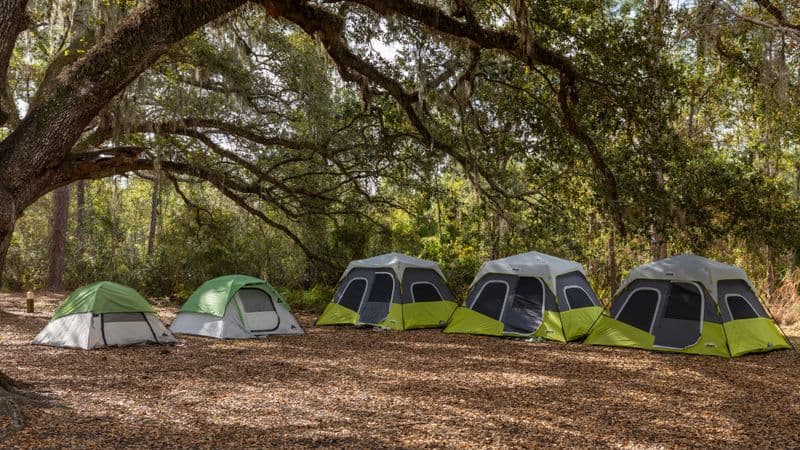
Backpacking has a gear-cost reputation problem, and tents are the biggest offender — flagship two-person shelters from the big names run $400–550. The good news is that the best budget backpacking tent 2026 shoppers can actually buy costs a third of that and gives up far less than the price gap suggests. After digging through owner reviews, long-term reports, and a year of price history, three tents under $180 stand out. Here they are, what the budget actually buys, and — because this is GearWhen — the months when their prices bottom out.
What 'budget' really buys you in a backpacking tent
Under $180, backpacking tents make one consistent trade: weight for money. Where a premium two-person shelter hits 2–3 pounds using 15–20-denier silnylon and exotic pole layouts, budget tents land between 4 and 5.5 pounds using thicker 20–68-denier fabrics and simpler single-hub aluminum poles. That extra pound and a half is real on your back — but the thicker floor and fly are also harder to puncture, which is exactly what a first tent needs to survive learning-curve mistakes.
The other fork in the road is the pitch. Freestanding tents stand on their poles alone and can be picked up and repositioned; semi-freestanding designs save pole weight by requiring stakes at the foot end, which gets fiddly on rocky or sandy ground. Neither is wrong, but beginners tend to be happier freestanding. The one genuine red flag at this price is fiberglass poles — all three picks below use aluminum, and anything that doesn't isn't worth carrying.
The best budget backpacking tent 2026 picks, compared
On paper the three sit close together. The Cloud-Up 2 is the lightest at roughly 4 pounds with a tapered floor around 27 square feet; the Late Start 2 carries about a half pound more but pitches faster and offers a rectangular floor near 29.5 square feet; the UL Granite 2P is the heaviest at around 5 pounds and the most livable, at prices that run roughly $100, $150, and $180 respectively when discounts are on.
Best overall: Kelty Late Start 2
The Late Start 2 is the tent we'd hand a first-time backpacker. It's fully freestanding, and Kelty's pressure-fit corner connectors make the pitch genuinely fast — the name is not a joke — with a single pre-bent pole hub that goes up in minutes even in fading light. Packed weight lands around four and a half pounds, floor space is a usable 29.5-ish square feet, and the 68-denier polyester fly is thicker and more forgiving than the wispy fabrics on true ultralight tents. Owner consensus rates it well in sustained rain. The compromises: one door, one vestibule, and a pack size on the bulky side. It typically lists in the $160–180 range and dips well below that in sale windows.
Best value: Naturehike Cloud-Up 2
The Cloud-Up 2 is the budget-ultralight legend of Reddit gear lists, and the reason is arithmetic: with fly and included footprint it packs at roughly four pounds and routinely sells near $100 when Amazon coupons rotate through. The 20-denier ripstop nylon fly and single aluminum pole keep weight down; the trade is a semi-freestanding pitch (the foot corners need stakes) and a tapered floor that's honestly one-person-plus-gear rather than a roomy two. Long-term owners report the fly and floor hold up fine if you treat the thin fabric with a little care. One door, a small vestibule, and instructions best described as optional — but at this price, nothing else comes close on weight.
Upgrade pick: Featherstone UL Granite 2P
The UL Granite 2P exists to answer one complaint about cheap two-person tents: sharing a single door gets old fast. It's freestanding with two doors and two vestibules — the layout you normally pay Big Agnes prices for — plus a seam-taped 20-denier fly and bathtub floor that owners consistently describe as storm-ready out of the bag. Trail weight runs around five pounds, so it's the heaviest pick here, and it packs bulkier than the Naturehike. Featherstone is a small California brand sold mostly through Amazon, which cuts both ways: its warranty service draws real praise, but stock and pricing fluctuate. When it drops toward $150 in a sale window, it's the best livability-per-dollar in budget backpacking.
Check the coupon box before anything else
When budget backpacking tents are cheapest
Tents follow the outdoor-industry calendar, and it's unusually predictable. Amazon prices on these three models swing 20–35% across a typical year, and the low points cluster in two places: the end-of-summer clearance stretch from late August through Labor Day, when retailers flush camping inventory before fall, and Black Friday through Cyber Monday, when the budget brands undercut each other hardest. Spring sale events at the big outdoor retailers offer a smaller, member-flavored discount. Buying in June or July — peak backpacking season — is when you're most likely to pay full freight.
| Window | Typical move | Verdict |
|---|---|---|
| Late Aug–Sept clearance | 20–35% off as summer stock clears | Best |
| Labor Day weekend | 20–30% at outdoor retailers | Buy |
| Black Friday / Cyber Monday | 25–35%, budget brands compete hardest | Buy |
| Spring sale events (May) | 15–25% at member-style sales | Maybe |
| Peak season (June–July) | Full price, occasional coupons | Wait |
- Typical move
- 20–35% off as summer stock clears
- Verdict
- Best
- Typical move
- 20–30% at outdoor retailers
- Verdict
- Buy
- Typical move
- 25–35%, budget brands compete hardest
- Verdict
- Buy
- Typical move
- 15–25% at member-style sales
- Verdict
- Maybe
- Typical move
- Full price, occasional coupons
- Verdict
- Wait
Ranges reflect typical historical pricing patterns on budget backpacking tents. Individual deals vary and are never guaranteed.
The fake-MSRP trap
How to spot a genuine tent deal
Three checks separate real discounts from noise. First, know the tent's typical selling price, not its MSRP — the Cloud-Up 2's everyday price already sits far below its listed one, so a "30% off" badge may be worth five dollars. Second, confirm the version: budget brands quietly sell multiple generations and fabric weights under one product name, and the discounted variant is sometimes the older or heavier one. Third, mind seasonality in reverse — a mediocre discount in September will usually be beaten within weeks, while the same discount in June probably won't return until fall. If a price beats the model's usual low and the version checks out, buy without agonizing; these tents rarely drop much further than their seasonal floor.
The verdict
The Kelty Late Start 2 is the best budget backpacking tent for most people in 2026 — freestanding, fast to pitch, and genuinely weatherproof for well under $200. Take the Naturehike Cloud-Up 2 if the lowest weight and price matter most and you don't mind staking the foot end, and step up to the Featherstone UL Granite 2P if you'll share the tent often enough for two doors to earn their ounces. Whichever you pick, timing beats haggling: a late August–September or Black Friday purchase routinely saves 20–35% over buying in spring.
If your trips lean more car-camping than trail, our guide to the best tents under $200 covers roomier options at the same budget. For the full seasonal picture, see when camping gear goes on sale, and if the end-of-summer window is coming up, our Labor Day outdoor gear sales 2026 preview maps what to expect on tents specifically.